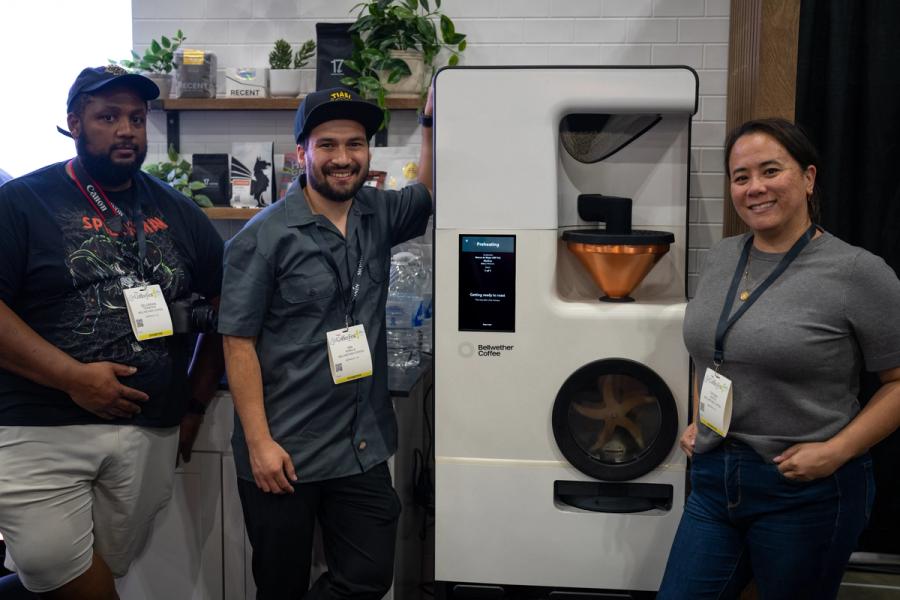
Coffee roasting in a café or retail space requires either a ventless electric roaster or a traditional roaster with proper exhaust infrastructure. Ventless roasters like the Bellwether Shop Roaster (1.5 kg capacity, 200-240V power, 24.6" × 36.5" footprint) can operate in any commercial space without gas lines or external exhaust, making indoor roasting accessible for locations that previously couldn't accommodate roasting equipment.
This guide covers everything you need to know about roasting coffee indoors: equipment options, space requirements, ventilation considerations, costs, and how to determine the best approach for your specific situation.
Can You Roast Coffee Indoors?
Yes, but the approach depends on your equipment choice:
Option 1: Ventless Electric Roaster (No Exhaust Needed)
Ventless roasters use internal afterburner and filtration systems to neutralize smoke and volatile organic compounds (VOCs) before air exits the machine. This eliminates the need for:
- External exhaust hoods
- Ductwork to the exterior
- Rooftop penetrations
- Make-up air systems
Best for: Cafés, retail spaces, malls, office buildings, hotels, and any location where exhaust infrastructure isn't feasible.
Option 2: Traditional Roaster with Exhaust System
Gas or traditional electric drum roasters produce smoke that must be vented outside. This requires some or all of:
- Exhaust hood over the roaster
- Ductwork routed to the exterior (often through roof)
- Afterburner or thermal oxidizer (required in most jurisdictions)
- Make-up air system to replace exhausted air
- Dedicated roasting room (often required by fire codes)
Best for: Dedicated roasting facilities, industrial spaces, or locations with existing exhaust infrastructure.
Indoor Roasting with Ventless Equipment
For most café owners, ventless roasters provide the simplest path to indoor roasting.
How Ventless Indoor Roasting Works
The Bellwether Shop Roaster handles roasting byproducts internally:
- Coffee roasts in an enclosed chamber
- Smoke and VOCs pass through an internal afterburner
- Catalytic filtration removes remaining particulates
- Clean, filtered air exits at safe levels
- Mild coffee aroma (similar to brewing) is the only noticeable output
This allows you to roast anywhere you'd brew coffee—behind the bar, in a prep area, or customer-facing.
Space Requirements for Indoor Ventless Roasting
| Requirement | Specification |
|---|---|
| Footprint | 24.6" W × 28.2" D (approximately 5 sq ft) |
| Height | 36.5" (countertop) or 69.8" (with base cabinet) |
| Clearance | 2" minimum on both sides |
| Floor/counter capacity | 405 lbs (roaster) or 527 lbs (full configuration) |
| Electrical | 200-240V, 30A dedicated circuit |
| Ventilation | Standard HVAC (no special roaster exhaust) |
Ideal Indoor Placement Options
Behind the bar: Puts roasting at the center of operations and naturally integrates into barista workflow. This placement works best for shops where roasting frequency is high, and allows baristas to monitor batches between drinks. Creates organic customer conversation without dedicated theater space.
Customer-facing display: Treat the roaster as a brand asset, not just equipment. Shops that do this well typically roast during peak hours when foot traffic is highest, brief staff on talking points, and position signage explaining the process. The mild aroma becomes part of the sensory experience rather than an afterthought.
Dedicated prep area: Best for operators who want operational separation. This setup allows roasting to happen on a schedule, with green coffee storage is nearby, and allows finished beans tp go directly into workflow. Less theater, more precision.
Back of house: Maximum flexibility, minimal disruption to floor operations. Good choice during the learning curve of a first year of roasting before you're ready to make it a customer-facing story.
Integrating Roasting Into Your Daily Operations
When to roast: Most café operators roast before opening or during mid-morning slow periods. The Bellwether's 2-minute labor requirement per batch means roasting rarely conflicts with service, and a staff member can start a batch without leaving the floor for more than a few minutes.
Green coffee storage: You'll need dry storage space for green beans, typically for 2-4 weeks of inventory. Green coffee is more stable than roasted, so standard dry storage works. Plan for 2-4 square feet of shelving per 50 lbs of inventory.
Batch planning: Most café operators roast to a 3-5 day supply of roasted coffee rather than daily. This balances freshness with operational simplicity.
Indoor Roasting with Traditional Equipment
If you have or can install exhaust infrastructure, traditional roasters are also viable for indoor use.
Infrastructure Requirements
| Component | Purpose | Cost Range |
|---|---|---|
| Exhaust hood | Captures smoke above roaster | $3,000-$8,000 |
| Ductwork | Routes exhaust to exterior | $2,000-$5,000 |
| Afterburner | Neutralizes smoke before exterior release | $10,000-$30,000 |
| Make-up air | Replaces exhausted air | $2,000-$5,000 |
| Gas line | Fuel for gas roasters | $5,000-$15,000 |
Total infrastructure for traditional indoor roasting: $22,000-$63,000 before equipment.
Fire Code Considerations
Most jurisdictions require:
- Dedicated roasting room with fire-rated walls (often 1-hour rating)
- Automatic fire suppression (Ansul system) in hood
- Minimum distances from combustibles
- Specific ventilation rates
- Fire department inspections and permits
These requirements often make traditional indoor roasting impractical for cafés in multi-tenant buildings, malls, or spaces without dedicated back-of-house areas.
When Traditional Makes Sense Indoors
- You have an existing space with exhaust infrastructure (former restaurant with hood system)
- You're building a dedicated roasting facility with production as primary focus
- Your volume exceeds 80+ kg per day consistently
- You're an experienced roaster who prefers manual drum control
Your customers can taste the difference
Fresher coffee starts here
Coffee roasted this week vs. last month — your customers notice. Discover the most profitable way to serve great coffee.
Comparing Indoor Roasting Approaches
| Factor | Ventless (Bellwether) | Traditional with Exhaust |
|---|---|---|
| Infrastructure cost | $700-$2,500 | $22,000-$63,000 |
| Installation time | 1-2 weeks | 6-14 weeks |
| Space required | 5 sq ft + clearance | 15-40 sq ft + room |
| Location flexibility | Any commercial space | Limited by exhaust routing |
| Fire code complexity | Standard food service | Dedicated roasting requirements |
| Customer-facing viable | Yes | Rarely (noise, heat, smoke) |
| Experience required | None (automated) | 6-12 months typical |
| Daily capacity | 36-48 kg (80+ with upgrade) | 50-200+ kg |
For café-scale indoor roasting (under 50 kg/day), ventless equipment is typically more practical and economical.
Air Quality and Safety
Indoor roasting raises legitimate questions about air quality. Here's what to know:
Ventless Roaster Air Quality
The Bellwether's internal systems address air quality concerns:
- VOC elimination: Internal afterburner neutralizes volatile organic compounds
- Smoke elimination: No visible smoke exits the machine
- Particulate filtration: Chaff and particulates captured internally
- Certifications: UL 197, UL 710, and NSF4 for commercial food service safety
During operation, air quality in the room remains within normal commercial food service parameters. Standard HVAC provides adequate ventilation—no special roaster exhaust required.
Traditional Roaster Air Quality
Traditional roasters require:
- External exhaust to remove smoke and VOCs from the building
- Afterburner/thermal oxidizer to neutralize emissions before exterior release
- Make-up air to maintain indoor air pressure
- Regular maintenance of exhaust systems
Without proper exhaust, traditional roasters create unsafe indoor air quality and fire hazards.
Health Department Considerations
In most jurisdictions, coffee roasting falls under standard food service permits. However:
- Ventless roasters: Typically treated as food prep equipment with standard permitting
- Traditional roasters: May trigger additional fire, air quality, and building permits
Consult your local health department before finalizing equipment choice. Bellwether can provide documentation for permitting conversations.
Setting Up Indoor Roasting: Step by Step
For Ventless Equipment
Week 1: Planning
- Confirm electrical availability (240V, 30A)
- Verify floor/counter load capacity (405+ lbs)
- Select placement location
- Contact electrician for circuit installation
Week 2: Installation
- Electrician installs dedicated circuit with NEMA L6-30R receptacle
- Roaster delivered and positioned
- Connect power and internet
- Complete setup and calibration
- Staff training on operation
Ongoing
- Order green coffee through platform
- Develop or select roast profiles
- Begin roasting operations
For Traditional Equipment
Weeks 1-4: Design and Permits
- Engage architect/engineer for exhaust design
- Submit plans to building department
- Submit plans to fire department
- Obtain health department approval
- Secure all necessary permits
Weeks 5-10: Construction
- Gas line installation (if gas roaster)
- Exhaust hood installation
- Ductwork routing to exterior
- Afterburner installation
- Make-up air system
- Electrical work for roaster and systems
Weeks 11-14: Equipment and Inspection
- Roaster delivery and installation
- Fire department inspection
- Building final inspection
- Health department inspection
- Certificate of occupancy
Ongoing
- Regular exhaust system maintenance
- Afterburner servicing
- Fire suppression inspection
Cost of Indoor Roasting Setup
Ventless Setup Costs
| Item | Cost |
|---|---|
| Bellwether Shop Roaster | $14,900 |
| Electrical circuit installation | $500-$2,000 |
| Permits (standard food service) | $200-$500 |
| Total Setup | $15,600-$17,400 |
Traditional Setup Costs
| Item | Cost |
|---|---|
| Traditional roaster (1-3 kg) | $15,000-$30,000 |
| Gas line | $5,000-$15,000 |
| Exhaust system | $5,000-$15,000 |
| Afterburner | $10,000-$30,000 |
| Make-up air | $2,000-$5,000 |
| Fire suppression | $2,000-$5,000 |
| Permits and inspections | $1,000-$3,000 |
| Total Setup | $40,000-$103,000 |
The infrastructure difference makes ventless equipment the more accessible option for most indoor café applications.
Ready to roast in-house?
Take control of your margins
Save up to 50% on coffee costs with in-house roasting. Talk to our team about what Bellwether can do for your business.