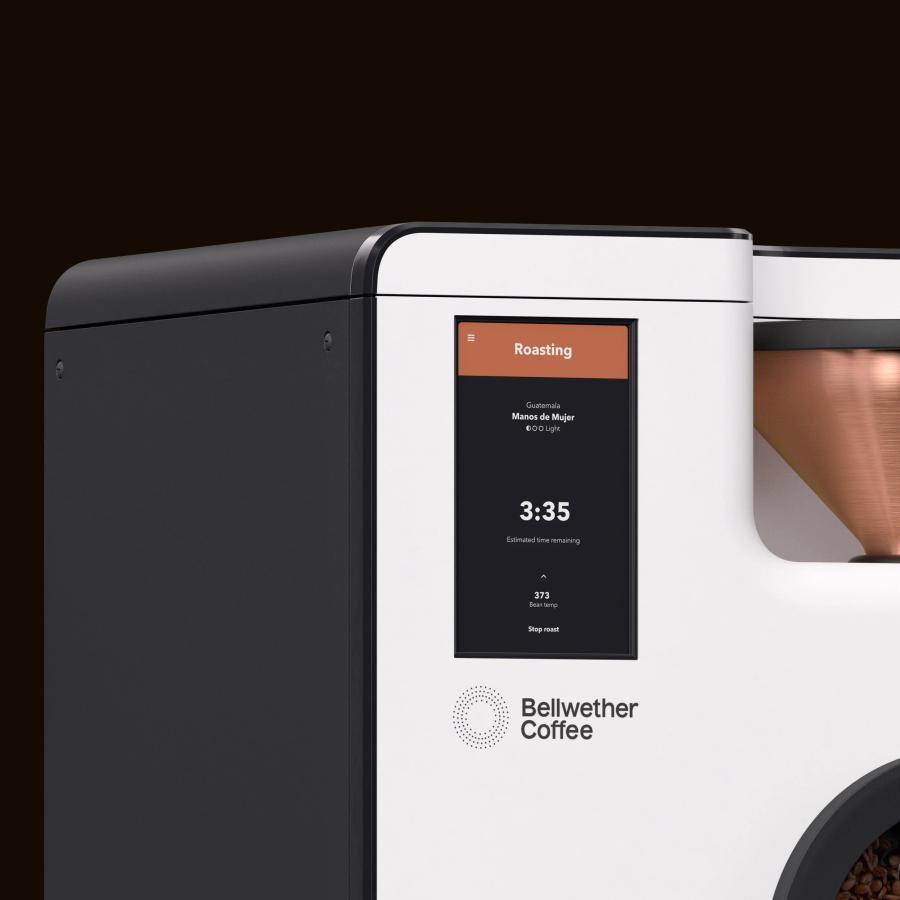
If you’re considering roasting coffee in-house, one of the first decisions you’ll face is whether to go electric or gas. The best choice depends on your volume, your location, your budget, and how hands-on you want to be with the roasting process. Both technologies produce excellent coffee—the differences are in cost, flexibility, and operations.
Electric coffee roasters typically cost $15,000–$40,000 less to install than gas roasters of similar capacity because they eliminate the need for gas lines, exhaust hoods, ductwork, and external afterburners. For cafés roasting 15–30 kg per day, an electric roaster like the Bellwether (1.5 kg batch, 3–4 roasts/hour) can match production needs while operating in locations where gas roasters simply cannot go.
This guide compares electric and gas coffee roasters across every factor that matters: installation requirements, operating costs, roast quality, location flexibility, and total cost of ownership.
Understanding the Fundamental Difference
The core distinction is heat source:
Gas Roasters burn natural gas or propane to generate heat. This requires:
- Gas line connection to the building
- Combustion exhaust ventilation
- External afterburner or thermal oxidizer (in most jurisdictions)
- Dedicated roasting room in many cases
Electric Roasters use electrical heating elements. Modern ventless electric roasters also include:
- Internal afterburner/catalytic systems
- No external exhaust requirement
- Plug-and-play installation
This fundamental difference cascades into major implications for cost, flexibility, and operations.
Installation Requirements Compared
Installation is where electric roasters show their biggest advantage.
Infrastructure Requirements
| Requirement | Gas Roaster (1–5 kg) | Ventless Electric (Bellwether) |
|---|---|---|
| Gas line | Required ($5,000–$15,000) | Not needed |
| Exhaust hood | Required ($3,000–$8,000) | Not needed |
| Ductwork to roof | Required ($2,000–$5,000) | Not needed |
| Afterburner/oxidizer | Often required ($10,000–$30,000) | Internal (included) |
| Make-up air system | Often required ($2,000–$5,000) | Not needed |
| Electrical circuit | 120V for controls | 200–240V, 30A dedicated circuit |
| Dedicated room | Often required | Not needed |
Installation Costs
| Cost Category | Gas Roaster | Ventless Electric (Bellwether) |
|---|---|---|
| Gas line installation | $5,000–$15,000 | $0 |
| Exhaust system | $5,000–$15,000 | $0 |
| Afterburner | $10,000–$30,000 | Included |
| Electrical work | $500–$1,000 | $500–$2,000 |
| Permits & inspections | $1,000–$3,000 | $200–$500 |
| Construction/buildout | $5,000–$20,000 | $0 |
| Total Installation | $26,500–$84,000 | $700–$2,500 |
For a café owner, this difference often determines whether in-house roasting is financially viable. The infrastructure savings alone can cover months of operating costs.
Installation Timeline
| Phase | Gas Roaster | Ventless Electric (Bellwether) |
|---|---|---|
| Permits & approvals | 2–8 weeks | 1–2 weeks |
| Gas line work | 1–2 weeks | N/A |
| Exhaust installation | 1–2 weeks | N/A |
| Electrical work | 1–2 days | 2–4 hours |
| Equipment delivery | 1–2 days | 1 day |
| Setup & calibration | 1–2 days | 2–4 hours |
| Total Timeline | 6–14 weeks | 1–2 weeks |
With electric roasters, you can go from decision to roasting in days rather than months.
Operating Costs Compared
Long-term operating costs favor different roasters depending on your volume and local utility rates.
Energy Costs
| Factor | Gas Roaster | Ventless Electric Roaster |
|---|---|---|
| Energy source | Natural gas + electricity | Electricity only |
| Typical consumption | 1–2 therms/hour + 1–2 kWh | 5 kW continuous during roast |
| Cost variability | Tied to gas prices | Tied to electric rates |
Cost calculation example (roasting 20 kg/day):
Gas roaster (3 kg capacity, ~7 roasts):
- Gas: ~10–14 therms/day × $1.50/therm = $15–$21
- Electricity: ~10 kWh × $0.15/kWh = $1.50
- Daily energy cost: ~$17–$23
Electric roaster (Bellwether, 1.5 kg capacity, ~14 roasts):
- Electricity: ~20–25 kWh × $0.15/kWh = $3–$4
- Daily energy cost: ~$3–$4
At typical utility rates, electric roasters cost significantly less to operate. However, rates vary widely—check your local gas and electric prices for accurate comparison.
Maintenance Costs
| Maintenance Item | Gas Roaster | Ventless Electric (Bellwether) |
|---|---|---|
| Annual service | $1,000–$3,000 | Minimal |
| Burner maintenance | $200–$500/year | N/A |
| Exhaust cleaning | $500–$1,500/year | N/A |
| Afterburner service | $500–$2,000/year | Internal (minimal) |
| Filter replacement | Varies | As prompted |
| Typical Annual | $2,000–$7,000 | $200–$500 |
Gas roasters have more mechanical systems that require regular professional service. Electric roasters have fewer moving parts and no combustion systems to maintain.
Location Flexibility
This is where electric ventless roasters fundamentally change what’s possible.
Where Gas Roasters Can’t Go
Gas roasters are restricted from many locations due to infrastructure requirements:
- Buildings without gas service
- Upper floors (exhaust routing issues)
- Historic buildings (can’t modify structure)
- Shopping malls (fire codes, exhaust restrictions)
- Shared commercial spaces
- Office buildings
- Many urban locations (permitting challenges)
Where Electric Ventless Roasters Can Go
With no gas or exhaust requirements, ventless roasters can operate almost anywhere:
- Any building with 240V power
- Shopping malls and food courts
- Office building cafés
- Hotel restaurants and lobbies
- Airport terminals
- Historic buildings
- Shared commercial kitchens
- Customer-facing retail spaces
- Upper floors of any building
For café owners, this flexibility can mean the difference between roasting in-house and not roasting at all.
Your customers can taste the difference
Fresher coffee starts here
Coffee roasted this week vs. last month — your customers notice. Discover the most profitable way to serve great coffee.
Roast Quality Comparison
A common question: does heat source affect roast quality?
Heat Transfer Methods
Gas roasters use:
- Convection (hot air from burner)
- Conduction (drum contact)
- Radiant heat from flame
Electric roasters use:
- Convection (heated air circulation)
- Conduction (drum/chamber contact)
- Precise electronic temperature control
Quality Factors
| Factor | Gas Roaster | Electric Roaster |
|---|---|---|
| Temperature precision | Good (varies by model) | Excellent (electronic control) |
| Repeatability | Operator-dependent | High (automated profiles) |
| Heat response time | Fast | Moderate |
| Profile flexibility | High (manual control) | High (cloud profiles) |
| Learning curve | Steep (6–12 months) | Minimal (automated) |
Professional roasters have produced exceptional coffee on both gas and electric equipment for decades. The heat source itself doesn’t determine quality—the roaster’s control systems, the operator’s skill, and the green coffee quality matter more.
Key insight: Electric roasters with automated profiles can produce consistent, high-quality roasts with minimal training. Gas roasters offer more manual control but require significant expertise to master.
Where Gas Still Has the Edge
Some highly experienced roasters prefer gas for a very specific reason:
- Real-time heat manipulation. Gas burners respond almost instantly to adjustment. Roasters who prefer a manual process use this to make micro-corrections mid-roast—riding the rate of rise, stretching development time, or pushing through first crack with a burst of heat. Electric heating elements are more precise and consistent, but slightly less responsive to real-time manual intervention.
Consistency Advantage
For café owners without professional roasting backgrounds, automated electric roasters offer a significant advantage:
- Pre-optimized profiles: Bellwether’s platform includes hundreds of roast profiles developed by professionals
- Exact repeatability: Same profile produces identical results every time
- Multi-location consistency: Cloud-synced profiles ensure every location roasts identically
- Reduced labor: 2 minutes of labor per roast vs. constant monitoring
This consistency is particularly valuable for cafés where the owner isn’t a trained roaster but wants the benefits of fresh-roasted coffee.
Capacity Comparison
Match your roaster to your volume needs:
| Roaster Type | Typical Batch Size | Batches/Hour | Daily Capacity (8 hrs) |
|---|---|---|---|
| Small gas drum | 1–3 kg | 3–5 | 25–120 kg |
| Medium gas drum | 5–12 kg | 2–4 | 80–380 kg |
| Large gas drum | 15–30 kg | 2–3 | 240–720 kg |
| Bellwether (standard) | 1.5 kg | 3–4 | 36–48 kg |
| Bellwether (w/ autoloader) | 1.5 kg × 13 | Continuous | 80+ kg |
For single-location cafés using 5–20 kg of roasted coffee per day, the Bellwether’s capacity is typically more than sufficient. For wholesale operations or multi-location businesses with higher volume needs, larger gas roasters or multiple electric units may be appropriate.
Environmental Considerations
Electric roasters offer environmental advantages:
| Factor | Gas Roaster | Electric Ventless (Bellwether) |
|---|---|---|
| Direct combustion emissions | Yes | No |
| VOC emissions | Requires afterburner | Eliminated internally |
| Carbon footprint | Baseline | Up to 87% lower |
| Noise level | Moderate-high | Lower |
| Indoor air impact | Requires ventilation | Ventless operation |
For cafés emphasizing sustainability, electric ventless roasting provides a cleaner, more environmentally conscious approach.
Total Cost of Ownership (3-Year View)
Here’s how costs compare over three years for a café roasting ~15 kg/day:
| Cost Category | Gas Roaster (3 kg) | Ventless Electric (Bellwether) |
|---|---|---|
| Equipment | $18,000–$30,000 | $14,900–$19,900 |
| Installation | $26,500–$84,000 | $700–$2,500 |
| Year 1 Energy | ~$5,000–$7,000 | ~$1,000–$1,500 |
| Year 1 Maintenance | ~$2,000–$5,000 | ~$200–$500 |
| Year 2–3 Energy | ~$10,000–$14,000 | ~$2,000–$3,000 |
| Year 2–3 Maintenance | ~$4,000–$10,000 | ~$400–$1,000 |
| 3-Year Total | $65,500–$150,000 | $19,200–$28,400 |
Even with similar equipment prices, the total cost of ownership heavily favors electric roasters due to installation savings, lower energy costs, and reduced maintenance.
Which Is Right for Your Business?
Choose Electric Ventless If:
- You’re opening a new café and want to minimize startup costs
- Your location lacks gas service or can’t accommodate exhaust systems
- You want to roast in a customer-facing area
- You don’t have professional roasting experience
- Consistency across multiple locations matters
- You want to be roasting within weeks, not months
- Your daily volume is under 50 kg
Choose Gas If:
- You’re a highly experienced roaster who prefers manual control
- You have existing gas infrastructure and exhaust systems
- Your volume exceeds 100+ kg per day
- You’re primarily a wholesale roasting operation
- You have dedicated roasting space separate from retail
Consider Both If:
- You run a high-volume wholesale operation (gas) AND retail café locations (electric)
- You want backup capacity across different systems
Ready to roast in-house?
Take control of your margins
Save up to 50% on coffee costs with in-house roasting. Talk to our team about what Bellwether can do for your business.
For detailed technical specifications including power requirements, dimensions, and capacity numbers, see our Bellwether roaster specifications guide.