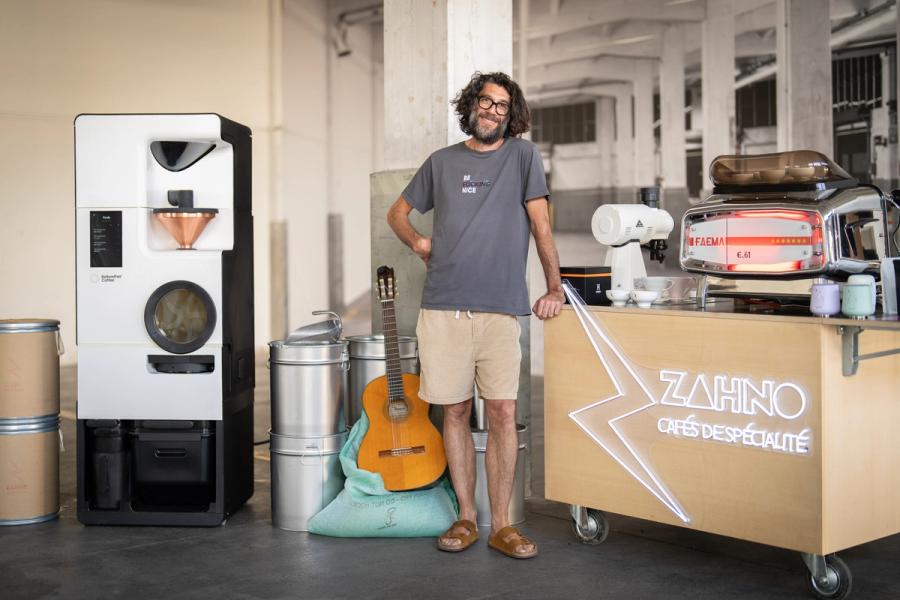
A well-designed small café can serve as many customers as a larger space that's poorly laid out. Smart layout choices maximize efficiency, improve customer experience, and make daily operations smoother. Whether you're working with 400 or 1,200 square feet, these principles help you make the most of what you have.
Space planning basics
| Area | % of total | 600 sq ft | 1,000 sq ft |
|---|---|---|---|
| Customer area | 40–50% | 240–300 sq ft | 400–500 sq ft |
| Service counter | 20–30% | 120–180 sq ft | 200–300 sq ft |
| Back of house | 15–25% | 90–150 sq ft | 150–250 sq ft |
| Circulation | 10–15% | 60–90 sq ft | 100–150 sq ft |
Minimum dimensions to plan around:
| Element | Minimum dimensions |
|---|---|
| Customer walkway | 36" wide |
| Service counter depth | 24–30" |
| Behind counter workspace | 36–42" |
| ADA accessible path | 44" wide |
| Table spacing | 36" between edges |
| Queue space | 4–6 sq ft per person |
Counter layout
The counter is your café's operational heart. Get it right first. A linear counter works best in very small spaces (under 600 sq ft) — single straight counter, equipment in line, order/pay/pickup in sequence, dimensions 10–16 ft length × 24–30" depth. Pros: simple efficient flow, minimal footprint. Cons: limited capacity, potential bottlenecks.
L-shaped counters fit medium spaces (600–1,000 sq ft). The counter wraps a corner, separates order from pickup, and creates more workspace behind the counter. Pros: natural flow separation, more counter space. Cons: corners can create dead space.
U-shaped counters fit larger small cafés (800–1,200 sq ft) — wraps around the barista workspace for maximum counter utilization with clear zones for different functions. Pros: efficient workflow, clear zones. Cons: requires more floor space.
Equipment placement
Behind the counter, organize by zones. Zone 1 (espresso station) gets prime real estate: espresso machine, grinders within arm's reach, knock box, tamping station. Zone 2 (milk and finishing): refrigerator with milk, syrups and flavorings, cup staging, drink finishing. Zone 3 (drip and batch): batch brewers, airpots or dispensers, iced coffee/cold brew, water station. Zone 4 (prep and storage): food prep if applicable, dish pit and cleaning, storage.
Counter-to-wall spacing: 36" minimum for one barista, 42–48" recommended (passing possible), 48–54" optimal (comfortable for two). Use under-counter space for refrigeration (milk, creamer), cup and lid storage, syrup storage, smallwares, trash and recycling.
Seating strategies
| Seating type | Space per seat | Best for |
|---|---|---|
| Counter / bar seating | 8–10 sq ft | Space efficiency |
| Two-top tables | 12–15 sq ft | Flexible configurations |
| Four-top tables | 10–12 sq ft | Larger groups, efficiency |
| Bench / banquette | 6–8 sq ft | Wall utilization |
| Standing / leaner | 4–6 sq ft | Quick service |
Use perimeter seating: bar along windows, bench along walls, tables in center. Mix seating types — some two-tops for flexibility, some four-tops for groups, some bar for solo customers. Mind flow: clear path to counter and exit, don't block bathroom access, maintain ADA requirements.
Sample layouts by size. 400–500 sq ft (micro café): 8–12 seats max, window bar (4–6 seats), 2–3 small tables (4–6 seats), focus on grab-and-go. 600–800 sq ft (small café): 15–25 seats, mix of seating types, small back-of-house, balance dine-in and to-go. 900–1,200 sq ft (medium-small café): 25–40 seats, multiple seating zones, room for small food program, more comfortable spacing.
More than a roaster
Everything you need to roast, brand, and sell
From sourcing to packaging, Bellwether gives you a complete coffee program. Launch faster, with fewer mistakes, and predictable margins from day one.
Integrating roasting
Adding a roaster to a small café requires thoughtful placement. Bellwether space requirements:
| Specification | Value |
|---|---|
| Footprint | 24.6" × 36.5" |
| Height | 28.2" |
| Clearance needed | 2" on both sides |
| Total floor space | ~8 sq ft |
| Weight | 405 lbs (527 with autoloader) |
Three placement options. Customer-visible (recommended) gives marketing advantage and conversation, requires front-of-house space, best near a window or visible area. Back-of-house gives dedicated production space, less customer interaction, often more practical for workflow. Under-counter (where height permits) — the 28.2" height fits under many counters and saves floor space; just ensure adequate ventilation clearance.
The layout impact: a Bellwether adds about 8 sq ft of footprint but doesn't require exhaust system space, gas line routing, afterburner placement, or a dedicated ventilation room. Compare that to traditional roasting setups that might need 50–100 sq ft for equipment, ventilation, and safety clearances.
Design tips for small spaces
Create perceived spaciousness through lighting (maximize natural light, layer ambient + task + accent, avoid harsh overhead-only, use mirrors strategically), colors (light colors expand perceived space, dark accents create depth, consistent palette throughout), and sightlines (open views feel larger, avoid blocking window views, keep counter height reasonable).
Optimize vertical space: wall-mounted menu boards, retail display shelving, cup/lid organizers, art and décor; pendant lights to define zones, exposed ceiling for added height, track lighting for flexibility. Multi-functional elements: tables that nest or stack, movable seating, built-in banquettes with storage, counter as retail display area, customer-facing merchandising, self-serve stations for water and napkins.
Common layout mistakes
Behind the counter: espresso machine too far from grinder, inadequate refrigeration near espresso, blocked workflow paths, POS in wrong position for queue. Customer area: tables too close together, blocking windows with furniture, no clear queue area, ignoring ADA requirements. Flow: order and pickup in same spot, customers blocking work area, no clear circulation path, bottlenecks during rush.
Ready to build your coffee brand?
Take control of your margins
Save up to 50% on coffee costs with in-house roasting. Break even in month one, payback in six. Talk to our team about launching your roastery.