Coffee and baked goods are a natural pairing—customers expect both. Adding coffee to your bakery can increase revenue by 20–40%, boost average ticket size, extend peak hours, and create reasons for customers to visit more frequently. But implementation matters: the wrong approach adds complexity without profit.
This comprehensive guide helps bakery owners evaluate the opportunity, choose the right equipment and menu, integrate coffee into operations, and maximize the profitability of your new coffee program.
The Business Case for Coffee in Bakeries
Before investing, understand what coffee can (and can't) do for your bakery.
Revenue Opportunity
Additional revenue potential:
| Bakery Size | Daily Pastry Sales | Potential Coffee Sales | Annual Addition |
|---|---|---|---|
| Small (50 daily customers) | $400 | $150–$200 | $45,000–$60,000 |
| Medium (100 daily customers) | $800 | $300–$400 | $90,000–$120,000 |
| Large (200+ daily customers) | $1,600+ | $600–$1,000 | $180,000–$300,000 |
Assumptions: 50–60% coffee attachment rate, $4–$5 average coffee transaction.
Profit Margins
Coffee typically offers higher margins than baked goods:
| Product | Gross Margin | Notes |
|---|---|---|
| Drip coffee | 80–90% | Highest margin |
| Espresso drinks | 70–80% | Good margin, more labor |
| Pastries | 55–70% | Lower margin, higher ticket |
| Bread | 50–65% | Volume dependent |
Combined impact: Coffee raises your overall margin mix while increasing total revenue.
Other Benefits
Increased visit frequency:
- Coffee is a daily habit (pastries are more occasional)
- Morning coffee brings customers who return for pastries
Extended peak hours:
- Bakeries peak early morning and lunch
- Coffee extends morning rush, creates afternoon traffic
Higher average ticket:
- Coffee + pastry combo increases transaction value
- Suggestive selling opportunities
Competitive necessity:
- Customers expect coffee with baked goods
- Without coffee, you lose visits to competitors who offer both
Potential Challenges
Before proceeding, consider:
- Space constraints in existing bakery
- Additional equipment and training costs
- Staff capacity during peaks
- Quality control (bad coffee hurts your brand)
- Competition from coffee shops
Coffee Program Options
Not every bakery needs a full espresso bar. Choose the right level for your space, budget, and customer expectations.
Option 1: Basic Drip Program
What it includes:
- Commercial drip brewer(s)
- Airpots or thermal servers
- Optional: cold brew
Investment: $1,500–$4,000
Best for:
- Bakeries with limited space
- Lower volume expectations
- Customers wanting quick coffee, not specialty drinks
Pros:
- Low cost and complexity
- Minimal training required
- Fast service (pour and go)
- High margins (80–90%)
Cons:
- Limited menu appeal
- Doesn't attract coffee enthusiasts
- Lower perceived value
Option 2: Espresso Program
What it includes:
- Commercial espresso machine
- Espresso grinder
- Milk refrigeration
- Full espresso drink menu
Investment: $10,000–$25,000
Best for:
- Bakeries wanting full café experience
- Higher-end bakeries with quality focus
- Locations near offices or in specialty food districts
Pros:
- Full drink menu (lattes, cappuccinos, etc.)
- Higher perceived value
- Attracts coffee-focused customers
- Competitive with coffee shops
Cons:
- Higher investment
- Significant training required
- More labor intensive
- Equipment maintenance
Option 3: Super-Automatic Espresso
What it includes:
- Bean-to-cup automatic machine
- Built-in grinder and milk system
- Push-button operation
Investment: $8,000–$20,000
Best for:
- Bakeries without barista experience
- High volume, consistency focus
- Limited training capacity
Pros:
- Consistent drinks every time
- Minimal training required
- Fast service
- Lower labor per drink
Cons:
- Less customization
- Coffee enthusiasts may prefer hand-crafted
- Maintenance requires technician
Option 4: Full Café Integration with Roasting
What it includes:
- All espresso program elements
- In-house coffee roasting
- Retail coffee sales
Investment: $35,000–$60,000
Best for:
- Bakeries becoming destination experiences
- Multi-location bakeries
- Bakeries with space for production area
Pros:
- Maximum differentiation
- Highest margins (roast your own)
- Additional revenue stream (retail bags)
- Marketing advantage ("house-roasted")
Cons:
- Significant investment
- Requires roasting knowledge
- More operational complexity
Option Comparison
| Level | Investment | Margin | Training | Best For |
|---|---|---|---|---|
| Basic drip | $1,500–$4,000 | 80–90% | 2–4 hours | Quick add, limited space |
| Espresso | $10,000–$25,000 | 70–80% | 2–4 weeks | Full café experience |
| Super-automatic | $8,000–$20,000 | 70–80% | 4–8 hours | Consistency, low labor |
| With roasting | $35,000–$60,000 | 80–90% | 4+ weeks | Destination bakery |
Equipment Selection
Drip Brewing Equipment
Commercial brewers:
| Type | Price | Capacity | Best For |
|---|---|---|---|
| Pourover brewer | $300–$600 | 1 pot | Very low volume |
| Single head | $500–$1,500 | 1 airpot | Low volume |
| Dual head | $1,000–$2,500 | 2 airpots | Medium volume |
| High capacity | $2,000–$4,000 | 3+ airpots | High volume |
Recommended: Fetco or Curtis brewer with thermal airpots. Budget $1,500–$2,500 for reliable equipment.
Cold brew systems:
| System | Price | Capacity |
|---|---|---|
| Toddy | $100–$200 | 2 gallons |
| Commercial concentrate | $500–$1,500 | 5+ gallons |
| Nitro system | $1,500–$3,500 | Varies |
Espresso Equipment
Machines for bakeries:
| Level | Price | Examples |
|---|---|---|
| Entry | $4,000–$8,000 | Nuova Simonelli Appia, Rancilio Classe |
| Mid-range | $8,000–$15,000 | La Marzocco Linea PB, Victoria Arduino |
| Super-automatic | $8,000–$20,000 | Eversys Cameo, WMF 1500 S |
Grinders:
| Level | Price | Examples |
|---|---|---|
| Entry | $1,200–$2,000 | Mazzer Mini, Eureka Atom |
| Mid-range | $2,000–$3,500 | Mahlkönig E65S, Mazzer Major V |
Total espresso setup: $7,000–$20,000 for equipment
Roasting Equipment
If adding in-house roasting, ventless electric roasters fit bakery environments:
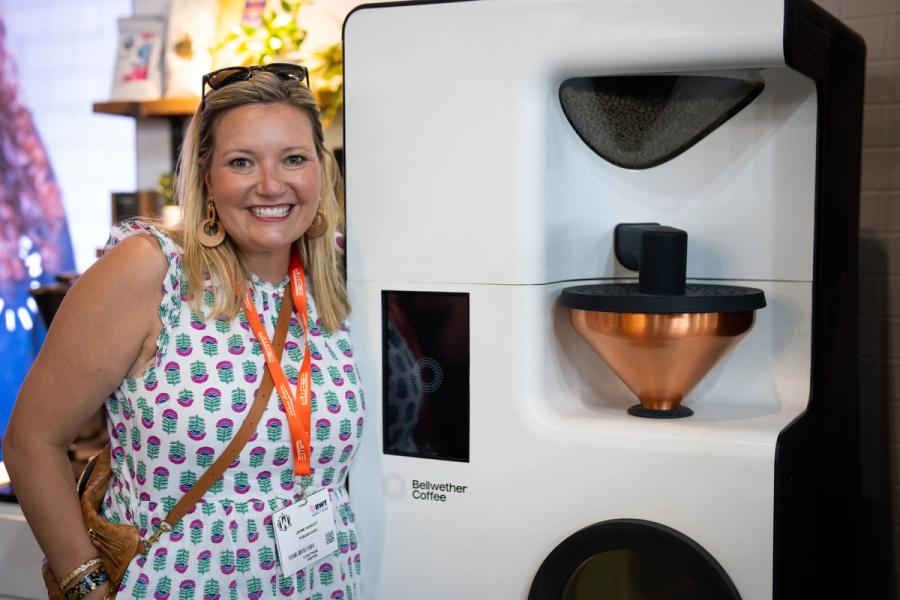
Bellwether Shop Roaster:
- Price: $14,900
- Capacity: 1.5 kg per batch, 3–4 roasts/hour
- Labor: 2 minutes per roast
- Dimensions: 24.6" × 36.5" × 28.2"
- Weight: 405 lbs
More than a roaster
Everything you need to roast, brand, and sell
From sourcing to packaging, Bellwether gives you a complete coffee program. Launch faster, with fewer mistakes, and predictable margins from day one.
- Electrical: 200-240 VAC, 30A, 5kW
- No gas, exhaust, or afterburner required
Why ventless for bakeries:
- Fits in bakery production area
- No infrastructure changes
- No additional permits beyond food service
- Doesn't interfere with baking ventilation
Water and Infrastructure
Water filtration (essential):
- Commercial filter: $500–$1,500
- Installation: $200–$500
- Protects equipment and improves taste
Electrical considerations:
- Most equipment runs on standard 120V
- Larger espresso machines may need 240V
- Bellwether roaster requires 240V, 30A circuit
Plumbing:
- Espresso machines need water line connection
- Drain access for easy cleaning
- Most bakeries have adequate plumbing
Space Planning
Integrating coffee into an existing bakery requires thoughtful space planning.
Counter Space Requirements
Minimum footprints:
| Equipment | Counter Space | Notes |
|---|---|---|
| Drip brewer | 18" × 24" | Plus airpot storage |
| Espresso machine (2-group) | 30" × 24" | Plus grinder space |
| Grinder | 8" × 12" | Each grinder |
| Super-automatic | 24" × 24" | Varies by model |
| POS station | 18" × 18" | If adding dedicated |
Total space needed:
- Basic drip: 4–6 sq ft counter
- Espresso program: 8–15 sq ft counter
- Full café integration: 15–25 sq ft counter
Layout Considerations
Customer flow:
- Coffee pickup shouldn't block bakery line
- Separate order and pickup points if possible
- Clear queuing space
Staff workflow:
- Minimize steps between equipment
- Milk, cups, and lids within reach
- Shared register or dedicated coffee register
Display integration:
- Coffee menu visible from bakery line
- Retail coffee visible (if selling bags)
- Pairing suggestions with pastries
Roaster Placement
If adding roasting:
Bellwether footprint: 24.6" × 36.5" floor space, 28.2" height
Placement options:
- Back-of-house production area (most common)
- Customer-visible as theater (marketing advantage)
- Separate roasting room (if space allows)
Requirements:
- 2" clearance on both sides
- 240V outlet within 8 feet
- Level, stable floor (405 lbs weight)
Menu Development
Your coffee menu should complement your bakery, not compete with coffee shops on breadth.
Core Menu Recommendations
Essential drinks (start here):
- Drip coffee (regular and decaf)
- Americano
- Latte
- Cappuccino
- Espresso
Expansion drinks (add as volume grows):
- Mocha
- Seasonal specialty (pumpkin latte, etc.)
- Cold brew
- Iced versions of core drinks
What to skip (initially):
- Extensive syrup menu
- Blended drinks (equipment and time)
- Complex specialty drinks
Pairing Strategy
Classic pairings to promote:
| Pastry Type | Coffee Pairing | Notes |
|---|---|---|
| Croissant | Latte or cappuccino | Milk cuts butter richness |
| Chocolate pastry | Mocha or dark roast | Complement flavors |
| Fruit danish | Light roast or pour-over | Bright coffee, fruit notes |
| Cinnamon roll | Medium roast drip | Warm, comforting match |
| Savory scone | Americano | Clean, not competing |
Bundle pricing:
- Coffee + pastry combo for 10–15% savings
- Encourages full-basket purchasing
- Increases average ticket
Pricing Strategy
Price positioning:
| Drink | Independent Café | Bakery Price | Notes |
|---|---|---|---|
| Drip coffee | $2.50–$3.50 | $2.50–$3.00 | Competitive or slightly lower |
| Latte | $4.50–$6.00 | $4.50–$5.50 | Match market |
| Specialty | $5.50–$7.00 | $5.00–$6.00 | Slightly lower acceptable |
Reasoning: Customers expect bakery coffee to be priced at or slightly below café prices. Your margin advantage comes from attachment rate and shared overhead, not premium pricing.
Staff Training
Coffee quality depends on execution. Invest in training.
Training Timeline by Program Level
Basic drip (2–4 hours):
- Equipment operation
- Coffee freshness management
- Serving standards
- Cleaning procedures
Espresso program (2–4 weeks):
- Week 1: Espresso basics, dialing in
- Week 2: Milk steaming and texturing
- Week 3: Drink building, speed practice
- Week 4: Quality consistency, troubleshooting
Super-automatic (4–8 hours):
- Machine operation
- Milk system maintenance
- Basic troubleshooting
- Quality standards
Key Training Topics
For all programs:
- Coffee freshness (when to brew, when to dump)
- Serving temperature and portions
- Cleaning and sanitation
- Customer service for coffee orders
For espresso:
- Shot timing and extraction
- Grind adjustment
- Milk steaming technique
- Latte art basics (optional but impressive)
Ongoing Quality Control
- Daily equipment calibration
- Weekly deep cleaning
- Monthly equipment inspection
- Regular taste testing
Financial Projections
Understand the numbers before investing.
Startup Costs
Basic drip program:
| Item | Cost |
|---|---|
| Drip brewer(s) | $1,000–$2,500 |
| Airpots/servers | $200–$500 |
| Grinder (optional) | $500–$1,000 |
| Water filtration | $500–$1,000 |
| Supplies/smallwares | $300–$500 |
| Total | $2,500–$5,500 |
Espresso program:
| Item | Cost |
|---|---|
| Espresso machine | $6,000–$15,000 |
| Grinder(s) | $2,000–$3,500 |
| Water filtration | $500–$1,000 |
| Under-counter fridge | $1,000–$2,000 |
| Smallwares/supplies | $500–$1,000 |
| Total | $10,000–$22,500 |
With roasting:
| Item | Cost |
|---|---|
| Espresso program (above) | $10,000–$22,500 |
| Bellwether roaster | $14,900 |
| Electrical circuit | $500–$2,000 |
| Packaging equipment | $500–$1,500 |
| Total | $25,900–$45,900 |
Revenue Projections
Assumptions: Medium bakery (100 daily customers), 50% coffee attachment rate, $4.50 average coffee transaction
| Metric | Monthly | Annual |
|---|---|---|
| Coffee transactions | 1,500 | 18,000 |
| Average transaction | $4.50 | — |
| Coffee revenue | $6,750 | $81,000 |
| Gross margin (75%) | $5,063 | $60,750 |
Payback Period
| Investment Level | Investment | Annual Gross Profit | Payback |
|---|---|---|---|
| Basic drip | $4,000 | $15,000–$25,000 | 2–3 months |
| Espresso | $15,000 | $45,000–$60,000 | 4–6 months |
| With roasting | $45,000 | $60,000–$80,000 | 8–12 months |
Note: Payback periods are based on incremental gross profit from coffee. Actual results depend on attachment rate and volume.
Operational Integration
Successfully integrating coffee requires workflow planning.
Daily Operations
Opening:
- Start coffee equipment 30 minutes before open
- Brew first batch, pull test shots
- Stock milk, cups, supplies
- Verify equipment settings
During service:
- Monitor coffee freshness (dump drip every 30–60 min)
- Restock as needed
- Manage peak periods
Closing:
- Clean all coffee equipment
- Backflush espresso machine (if applicable)
- Prep for morning
Staffing Considerations
Additional labor needs:
- Basic drip: Minimal (part of existing duties)
- Espresso: May need dedicated barista during peaks
- Consider cross-training bakers on coffee
Peak period management:
- Identify coffee peak times (often 7–9 AM)
- Schedule accordingly
- Have backup support available
Inventory Management
Coffee ordering:
- Weekly delivery for freshness (roasted coffee)
- Monitor usage patterns
- Maintain 1–2 weeks supply
Milk and supplies:
- Align with existing bakery deliveries
- Track usage by product
- Manage cold storage capacity
Ready to build your coffee brand?
Take control of your margins
Save up to 50% on coffee costs with in-house roasting. Break even in month one, payback in six. Talk to our team about launching your roastery.