Green coffee sourcing is the foundation of everything you roast. The quality of your raw beans determines the ceiling of your final product — no amount of roasting skill can fix poor green coffee. This guide covers how to find, evaluate, purchase, and manage green coffee for consistent, high-quality roasting.
Understanding green coffee
Green coffee is the raw, unroasted seed of the coffee cherry. After harvesting, processing, drying, and milling, green coffee is stable enough to ship worldwide and store for months. It's green to bluish-green in color (varies by origin and process), with a grassy, hay-like, sometimes fruity smell. Shelf life is 6–12 months at peak, depending on storage. Higher density generally indicates quality, and ideal moisture content is 10–12%.
Major origins and their typical flavor profiles:
| Region | Countries | Typical profiles |
|---|---|---|
| Central America | Guatemala, Costa Rica, Honduras | Balanced, clean, chocolate, nutty |
| South America | Colombia, Brazil, Peru | Smooth, caramel, nutty, mild fruit |
| East Africa | Ethiopia, Kenya, Rwanda | Bright, fruity, floral, complex |
| Indonesia | Sumatra, Java, Sulawesi | Earthy, herbal, full body, low acid |
Processing methods shape the cup as much as origin:
| Method | Process | Flavor impact |
|---|---|---|
| Washed | Fruit removed before drying | Clean, bright, acidic |
| Natural | Dried with fruit intact | Fruity, sweet, wine-like |
| Honey | Partial fruit left during drying | Sweet, balanced, complex |
| Wet-hulled | Unique to Indonesia | Earthy, low acid, full body |
Where to buy green coffee
Importer landscape:
| Type | Examples | Best for |
|---|---|---|
| Large specialty importers | Royal Coffee, Café Imports, Genuine Origin | Wide selection, education, reliability |
| Regional importers | Varies by region | Local relationships, smaller lots |
| Direct trade | Farm relationships | Unique coffees, story, commitment |
| Cooperatives | Equal Exchange, COOP Coffees | Mission-aligned, fair pricing |
| Brokers | Various | Commodity, large volumes |
For new roasters, the most useful starting points are Royal Coffee (education, consistency, large selection, 1 bag minimum at 60–70 kg), Café Imports (quality focus, sample program, 1 bag minimum), Genuine Origin (transparent pricing, online platform, often lower minimums), and Coffee Shrub (small-lot focus, hobbyist-friendly, 1 lb+). Good importers provide samples before buying, cupping notes and scoring, origin and producer information, arrival dates and inventory updates, quality consistency, and educational resources.
Build relationships gradually: start with samples, cup systematically, place initial orders, provide feedback, attend cuppings and events, and communicate your needs. Questions to ask: when did this coffee arrive, how was it stored, what's the moisture content, can I get the same lot again, what's the minimum order, and what's the lead time.
Evaluating green coffee quality
The SCA cupping protocol uses a standard 8.25g coffee to 150ml water ratio, evaluating fragrance, aroma, flavor, aftertaste, acidity, body, balance, uniformity, cleanliness, and sweetness on a 0–100 point scale. Quality tiers:
| Score | Grade | Description |
|---|---|---|
| 90+ | Outstanding | Exceptional, rare |
| 85–89.99 | Excellent | Specialty grade, distinctive |
| 80–84.99 | Very Good | Specialty grade, solid quality |
| Below 80 | Below specialty | Commercial grade |
Physical defects to check:
| Defect | Appearance | Impact |
|---|---|---|
| Quakers | Pale, underdeveloped beans | Peanutty, underdeveloped flavor |
| Insect damage | Small holes in beans | Off flavors, inconsistency |
| Broken / chipped | Fragments | Uneven roasting |
| Black beans | Dark / black color | Fermented, off flavors |
| Sour beans | Yellow / orange color | Sour, fermented taste |
Specialty grade allows max 5 full defects per 300g — fewer defects means a cleaner cup. Moisture content matters: ideal is 10–12%, above 12.5% risks mold and fading quality, below 9% suggests past-crop and faded flavor. Density signals quality — higher density usually means higher altitude and more complex flavor potential, but dense beans need more heat during roasting.
Ordering and inventory
Calculate your needs. A 100 lb/week roasted output at 15% roast loss requires 118 lbs of green per week (100 ÷ 0.85). An 8-week supply is around 945 lbs, or about 7 bags. Track consumption rates, monitor importer arrivals (new crop dates), order before running low (lead time buffer), and balance freshness vs. running out. Seasonal considerations: new crop arrivals are the freshest quality, crop year transitions matter (old vs. new), and harvest timing varies by origin.
Storage conditions: temperature 60–70°F (cool, stable), humidity 50–60% relative, protected from direct light, in GrainPro bags or sealed containers, off the floor and away from walls, no nearby odors. Storage life: peak quality is 3–6 months after arrival, good quality 6–12 months, past crop 12+ months (faded but usable). Aging signs: faded green color (more yellow or brown), diminishing grassy smell, declining cup quality, increased quakers when roasted.
Your customers can taste the difference
Fresher coffee starts here
Coffee roasted this week vs. last month — your customers notice. The most profitable way to serve great coffee, with zero disruption.
Building your coffee menu
Single origins showcase specific character, tell producer stories, support seasonal rotation, and command higher price points. Blends offer consistent year-round flavor, allow component substitution, often work better for espresso, and can be more cost-effective.
| Use | What to look for |
|---|---|
| House espresso blend | Consistent, forgiving, balanced |
| Filter / drip | Clean, bright or balanced |
| Cold brew | Low acid, chocolate / nutty, full body |
| Single origin showcase | Distinctive, story-worthy, seasonal |
| Decaf | Quality process (Swiss Water, EA) |
Pricing factors include origin and availability, quality score, lot size and exclusivity, certifications (organic, Fair Trade), and processing method complexity. Typical specialty green pricing: good specialty (82–84 score) runs $3.50–$5.00/lb, very good (85–87) is $5.00–$7.00/lb, excellent (88–90) is $7.00–$12.00/lb, exceptional (90+) is $12.00–$30.00+/lb.
Quality control
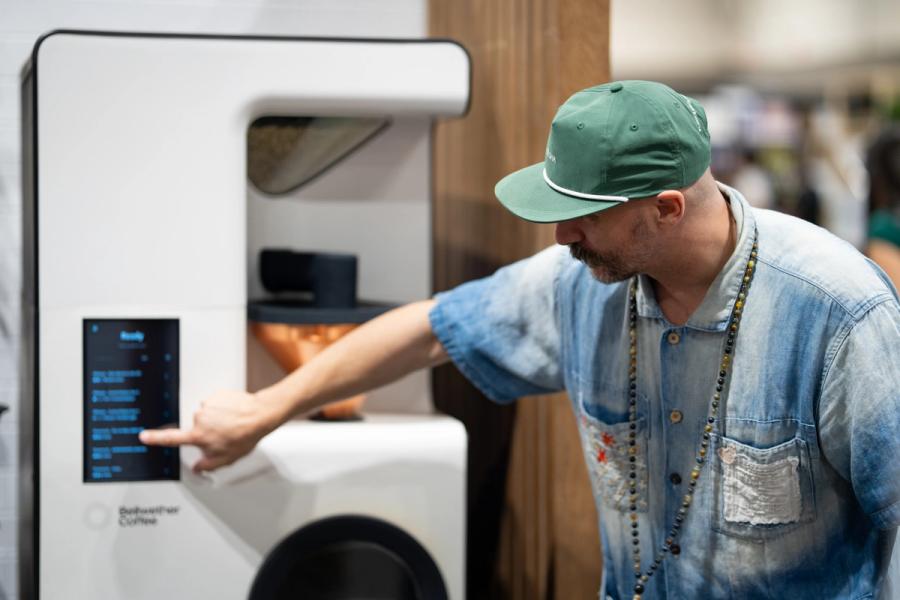
When coffee arrives, check bag condition (no tears, moisture damage), verify weight matches order, check moisture content, do visual inspection for defects, cup and compare to your reference sample, and document and store results. Before production roasting, sample roast a small batch (Bellwether: use the profile library or create a sample profile), cup multiple samples, confirm quality matches expectations, adjust roast profile if needed, and document the optimal profile. Bellwether's 1.5 kg batches are well-suited to sample roasting — small enough to test cheaply, with saved profiles for replication and consistent roasting that makes fair comparison possible.
On record-keeping: lot and contract information, arrival date, cupping scores and notes, moisture content, roast profiles used, and any anomalies. Good documentation is what lets you replicate a great coffee months later or troubleshoot a bad one.
Certifications and ethics
Common certifications:
| Certification | Focus | Premium |
|---|---|---|
| Fair Trade | Farmer compensation, labor | $0.50–$2.00/lb |
| Organic | No synthetic chemicals | $0.50–$1.50/lb |
| Rainforest Alliance | Environmental + social | $0.30–$1.00/lb |
| Bird Friendly | Shade-grown, habitat | $0.50–$2.00/lb |
| Direct Trade | Relationship-based | Varies |
Beyond certifications, direct trade practice — visiting farms, paying above market, multi-year purchasing commitments, transparent pricing — often delivers the same outcomes without the certification cost. The credible sustainability message uses specific verifiable claims ("farmer-paid price of $4.50/lb" beats "sustainable sourcing"), acknowledges supply chain complexity, and updates as your sourcing evolves.
Ready to roast in-house?
Take control of your margins
Save $1,000–5,000/month on coffee costs. Your wholesaler takes 67% of the margin on every pound — it’s time to take it back.