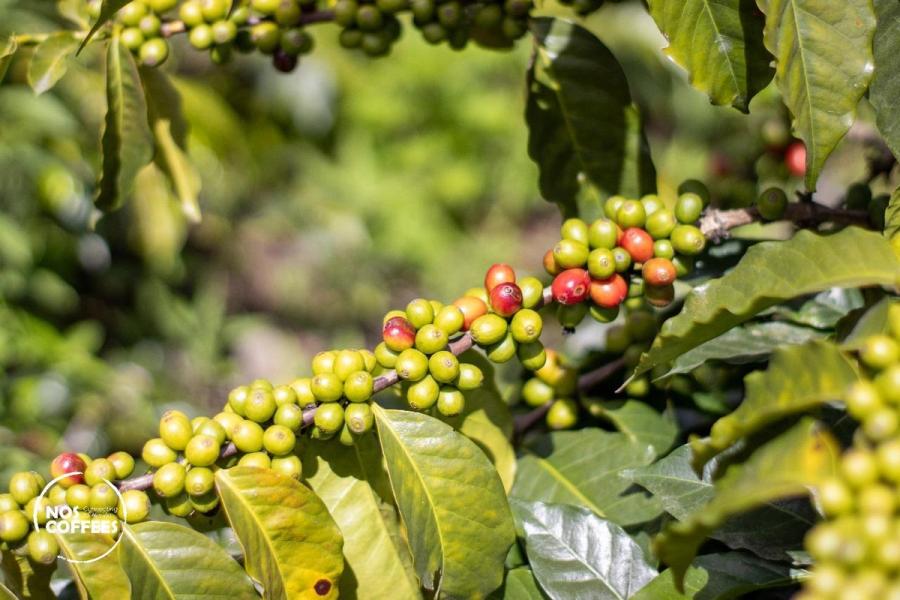
At Bellwether, we’re always searching for coffees that push boundaries — not just in flavor, but in process and philosophy. This latest release from Aponte, Colombia, is one of those coffees.
We sat down with Andres Martinez, a biochemical engineer turned coffee innovator, to talk about how beer fermentation led him to reimagine what coffee can taste like — and how his work with producers is shaping the future of specialty coffee.
Q: Andres, your background isn’t traditional for coffee. How did you get started?
A: I actually started in biochemical engineering, working in beer, wine, and fermentation. During COVID, I couldn’t access the university labs, so I started experimenting at home. At the same time, I was on my family’s coffee farm — and I started wondering: what if I applied fermentation techniques from beer to coffee?
One day, I used leftover fermentation “juice” from beer production on coffee. I didn’t even know how coffee was scored at the time — but when I submitted it, it scored 88 points. That’s when everything changed.


Q: That’s a big leap — from beer to coffee. What carried over?
A: Fermentation is fermentation. In beer, you’re always thinking about how microorganisms transform compounds into flavor. I brought that same mindset into coffee.
Over time, I developed a method I call biocatalysis — basically designing fermentation to guide flavor development in a very intentional way.
Q: What exactly is “biocatalysis” in coffee processing?
A: It’s about transforming compounds into other compounds to create a target flavor profile. For this coffee, I wanted to highlight floral and citrus notes.
So I designed a fermentation environment — what we call a “mosto” — a culture medium made from things like coffee mucilage, sugarcane molasses, fruit components, and even hops.
It’s similar in concept to building a beer recipe — but instead of beer, we’re shaping the flavor of coffee.
Q: There’s also a unique “rehydration” step in your process. Can you explain that?
A: Yes. Normally, coffee is dried after fermentation, losing about 50% of its water.
In our process, we dry the coffee first, then rehydrate it using the mosto. But instead of pure water, this liquid contains sugars, amino acids, and aromatic compounds.
The coffee absorbs these compounds, and then we dry it again. This helps fix more flavor into the bean naturally — without artificial additives.
Q: This coffee comes from Aponte, Colombia. What makes that region special?
A: Aponte is a very high-altitude region — farms range from about 2,050 to 2,500 meters above sea level.
That means:
- Slower cherry development
- Higher bean density
- More sugar development
It’s also a largely indigenous community, with very traditional farming practices. Many producers use honey processing to reduce water use.
So we’re starting with incredible raw material — and then enhancing it through processing.
Q: You work with multiple producers on this coffee. How does that collaboration work?
A: I develop the “recipe” and train producers to apply it on their farms. Each producer processes their own lot, and then we combine them into a community lot.
After that, we carry out the fermentation and final steps together.
It’s a way to scale innovation while still supporting small producers.
Great coffee, sourced responsibly
Explore the Green Coffee Marketplace
Traceable, ethically sourced coffees from farming communities around the world. Every coffee comes with a roast profile ready to go — consistent flavor, every batch.
Q: What can roasters expect from this coffee in the cup?
Across the Bellwether team, one thing stood out immediately: this coffee is expressive at every roast level.
- Aromatics: intensely floral, almost like a bouquet
- Flavor notes: lavender, citrus, Earl Grey tea
- Body: syrupy, structured, and full
- Finish: long, clean, and floral
Even at darker roasts — where florals usually disappear — this coffee retains its floral identity, which is extremely rare.
Q: What’s the best way to roast and brew it?
- Best expression: light to medium roast for clarity and terroir
- Brewing: pour-over highlights complexity and aromatics
- Espresso: possible, but intense and requires careful dialing
- Wildcard: darker roast pour-over still shows surprising floral character
This is a coffee that rewards experimentation — but also delivers right out of the gate.
Q: Beyond flavor, your work also touches sustainability. What’s your approach?
A: I try to teach producers how to use natural systems instead of chemicals, like using beneficial bacteria or fungi to control pests.
This reduces costs and protects the environment — and it also improves cup quality. For example, pesticide use is often linked to phenol defects in coffee.
Healthy soil and natural processes lead to better coffee over time.
Q: Final question — what makes this coffee special to you?
A: For me, it’s the combination of science, community, and flavor.
We’re not adding anything artificial — we’re just using knowledge of fermentation to unlock what’s already possible in coffee.


A Limited Release Worth Experiencing
This Caturra Floral lot is a limited community production, expected to move quickly. It’s a rare example of what happens when fermentation science meets high-elevation terroir and collaborative production.
If you’re looking for a coffee that challenges expectations — and expands what coffee can taste like — this is it.
Ready to roast in-house?
Take control of your margins
Save up to 50% on coffee costs with in-house roasting. Talk to our team about what Bellwether can do for your business.